Two Tone / 34 products
Studio & recording
Audio interfaces, studio monitors and microphones for recording and mixing.
In stock · Free UK delivery. Online ordering opens soon.
25–34 of 34 products
Audient
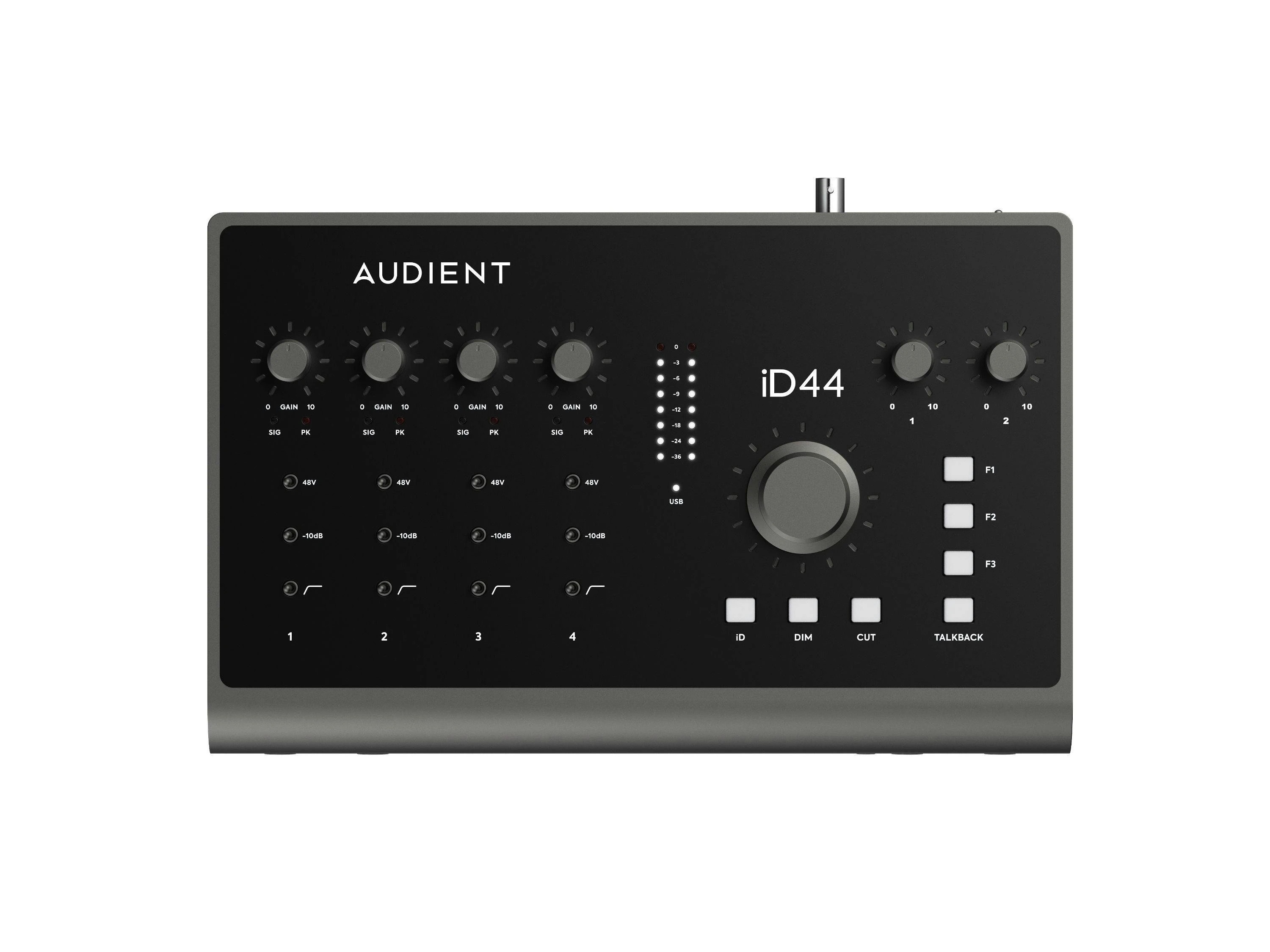
Audient iD44 MKII
Four microphone preamps with up to 60 dB gain
The Audient iD44 MKII is a desktop USB audio interface for recording microphones, instruments and line-level sources. Four microphone preamps provide up to 60 dB of microphone gain, with phantom power available for suitable condenser microphones. Two front-panel instrument connections support guitar and bass recording, while analogue insert connections on the first two input channels allow external processing to be integrated into the recording path. Its quoted 20-input and 24-output capacity combines analogue and digital channels. The manufacturer specifies four analogue inputs and sixteen digital inputs at 44.1 or 48 kHz; the available ADAT channel count falls at higher sample rates. Optical inputs and outputs support ADAT expansion or stereo S/PDIF, rather than adding more built-in microphone sockets. Four line outputs serve monitoring or external equipment, and dedicated headphone outputs provide personal monitoring. The USB Type-C socket operates using USB 2.0 High Speed, so the connector should not be confused with a USB 3 protocol specification. This is the MKII model: newer-generation iD44 converter claims are not assumed to apply to it.
Focal Professional
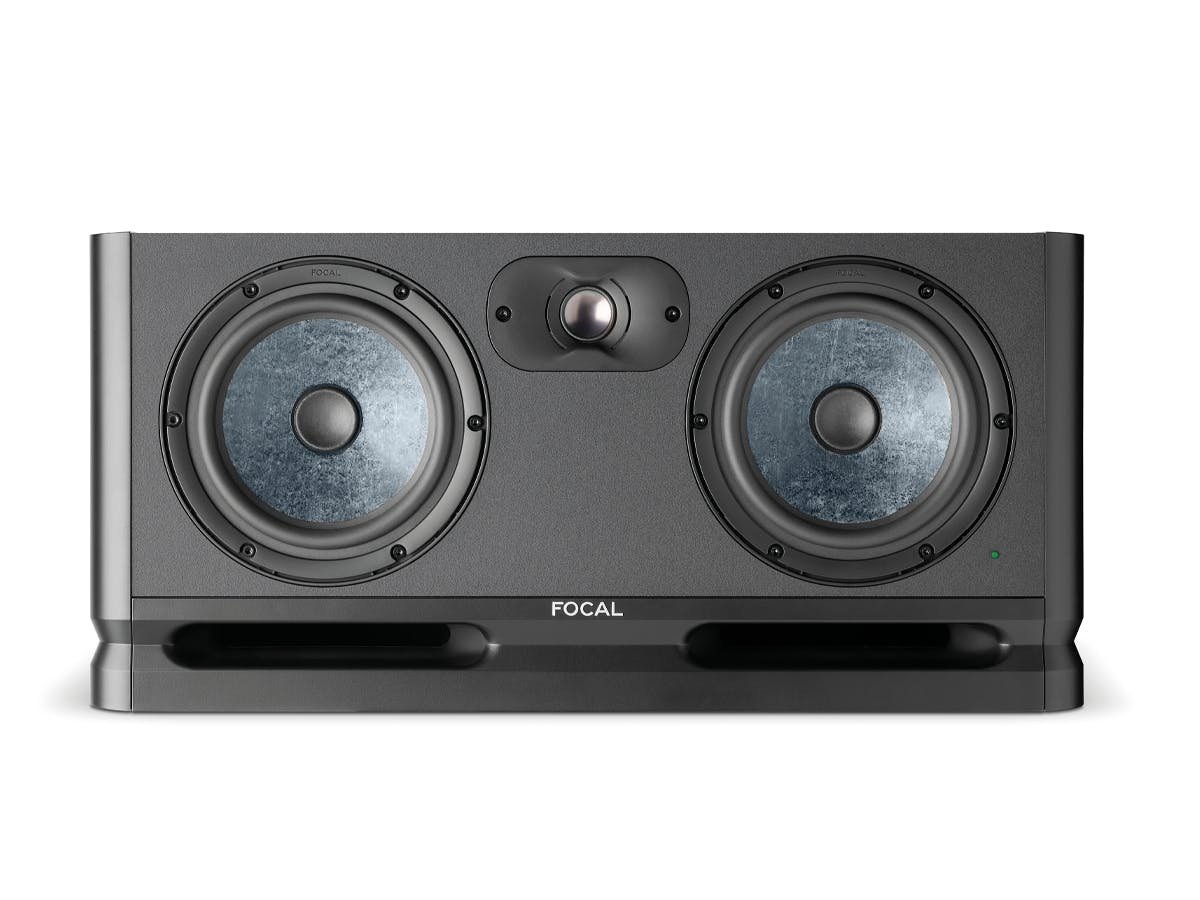
Focal Alpha Twin Evo — single monitor
Single powered 2.5-way studio monitor
The Focal Alpha Twin Evo is a powered studio monitor supplied here as one loudspeaker, not a stereo pair. Its horizontal 2.5-way design combines two 6.5-inch Slatefiber woofers with a one-inch aluminium inverted-dome tweeter. Focal specifies a frequency response of 38 Hz to 22 kHz within ±3 dB and a maximum peak sound pressure level of 108 dB at one metre. Built-in Class D amplification comprises two 50 W mid/low-frequency stages and a 30 W high-frequency stage. These separate amplifier figures should not be turned into an unspecified continuous system-power claim. Balanced XLR and TRS inputs, plus an unbalanced RCA input, provide connection options for suitable studio equipment. A rear-panel selector determines which woofer handles the midrange, helping the monitor’s arrangement suit its left or right position. Focal recommends placing the selected midrange drivers towards the inside when using two monitors. The cabinet measures 550 mm wide, 260 mm high and 290 mm deep, with a weight of 12.2 kg. A stereo setup requires a second monitor purchased separately.
Shure
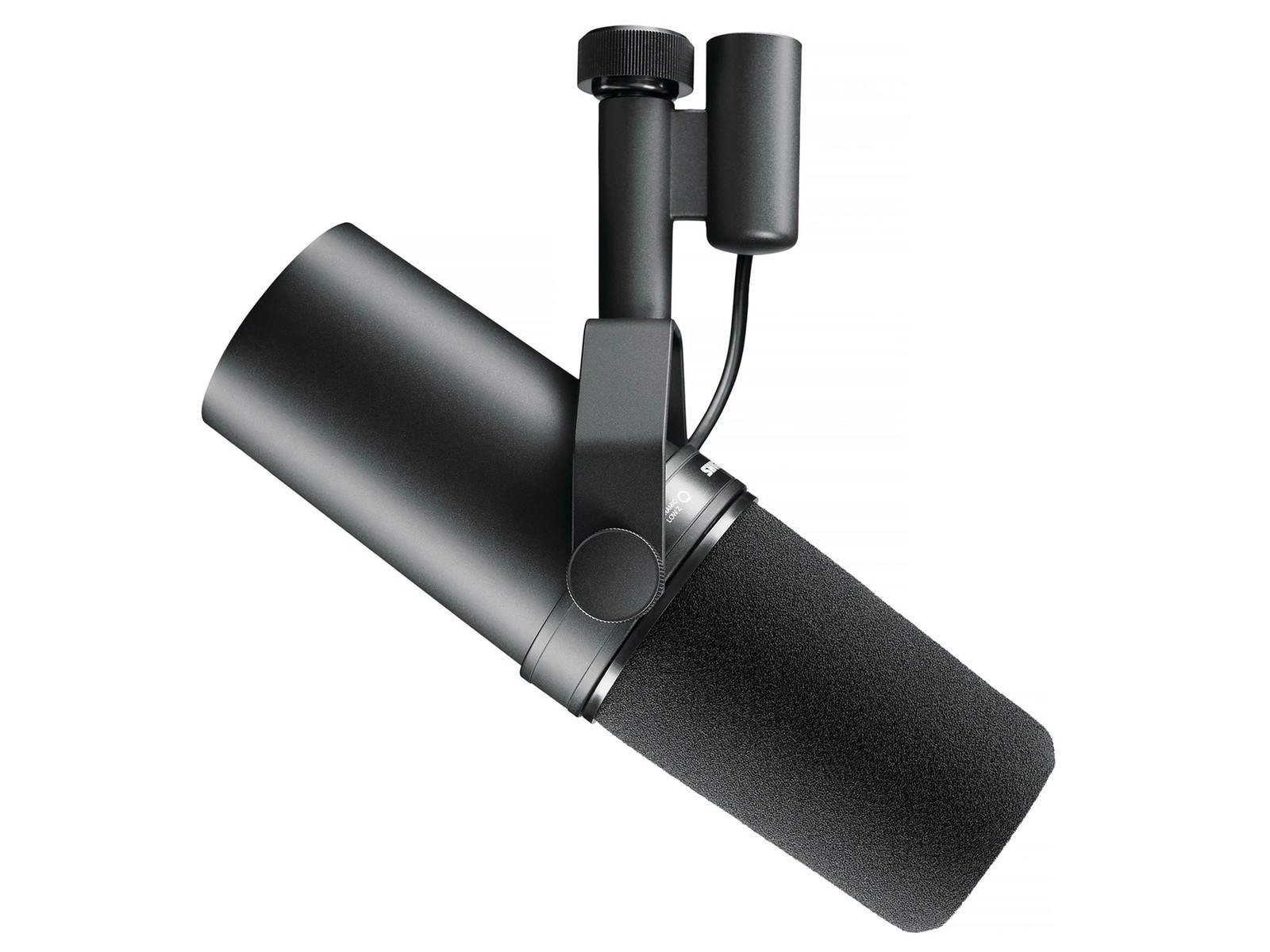
Shure SM7B Dynamic Vocal Microphone — Black
Cardioid moving-coil dynamic microphone
The Shure SM7B is a cardioid dynamic microphone with an analogue three-pin XLR output for vocal and spoken-word recording. Its moving-coil design does not need phantom power, and this original SM7B has no built-in active gain stage. It must not be confused with the separate SM7dB model, which adds an optional powered preamp. A suitable microphone input with sufficient clean gain is needed to obtain the desired recording level. Rear response switches provide bass roll-off and midrange presence emphasis. Shure specifies a frequency range of 50 Hz to 20 kHz; the selected response setting changes its tonal balance. The internal shock-isolation system and foam windscreen help manage mechanical vibration and breath noise, while the yoke mount allows the microphone angle to be adjusted. The standard package includes the foam windscreen and a larger close-talk windscreen. This listing is the microphone itself, not a boom-arm or headphone bundle. A support stand, XLR cable, interface and recording system are separate requirements. The cardioid pattern favours sound from the front and reduces off-axis pickup, but does not replace microphone technique or acoustic treatment. It is not a USB microphone or a standalone recorder.
Audient
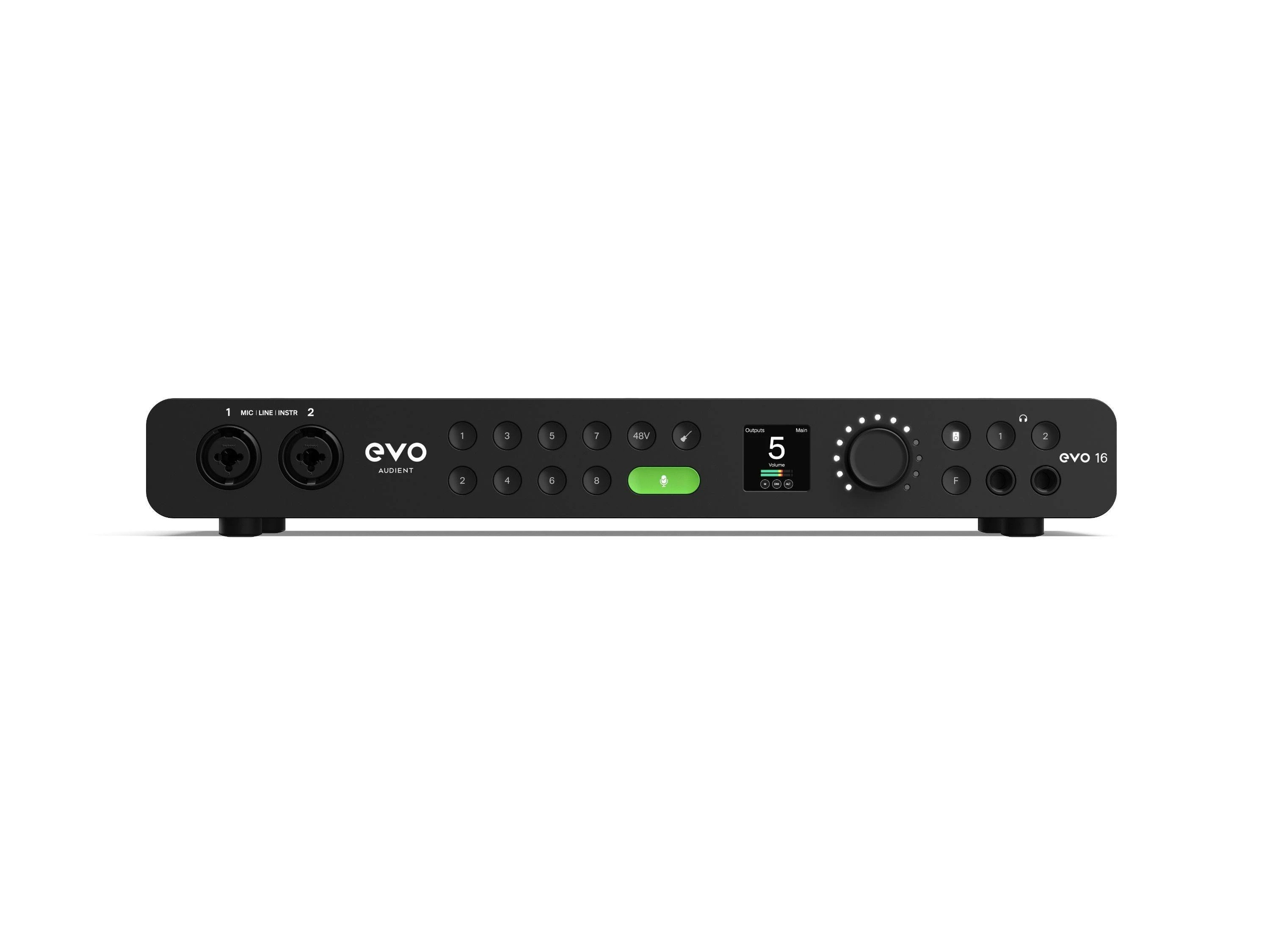
Audient EVO 16
Eight microphone preamps with 58 dB gain
The Audient EVO 16 is a desktop audio interface with eight microphone preamps for recording several sources in one session. Smartgain can analyse incoming signals and set input gain automatically, helping with initial level setting when recording alone or preparing a larger session. Each preamp offers a 58 dB gain range, while phantom power supports microphones that require it. Two instrument inputs provide a connection for guitar or bass, and eight line outputs allow audio to be routed to monitors or external equipment. Two dedicated headphone amplifiers provide personal monitoring. The colour display and Motion UI controls bring channel settings and metering together on the unit, while the software mixer supports monitoring and routing from a compatible computer. Optical digital inputs and outputs support ADAT or S/PDIF expansion. The advertised 24-input and 28-output capacity therefore includes digital channels and should not be read as twenty-four built-in microphone sockets. The physical preamp count remains eight. This interface is for computer-based recording, not a standalone recorder, and additional converters or preamps are required to use the expanded digital channel capacity.
ADAM Audio
ADAM Audio A4V Black — single monitor
Single black powered two-way studio monitor
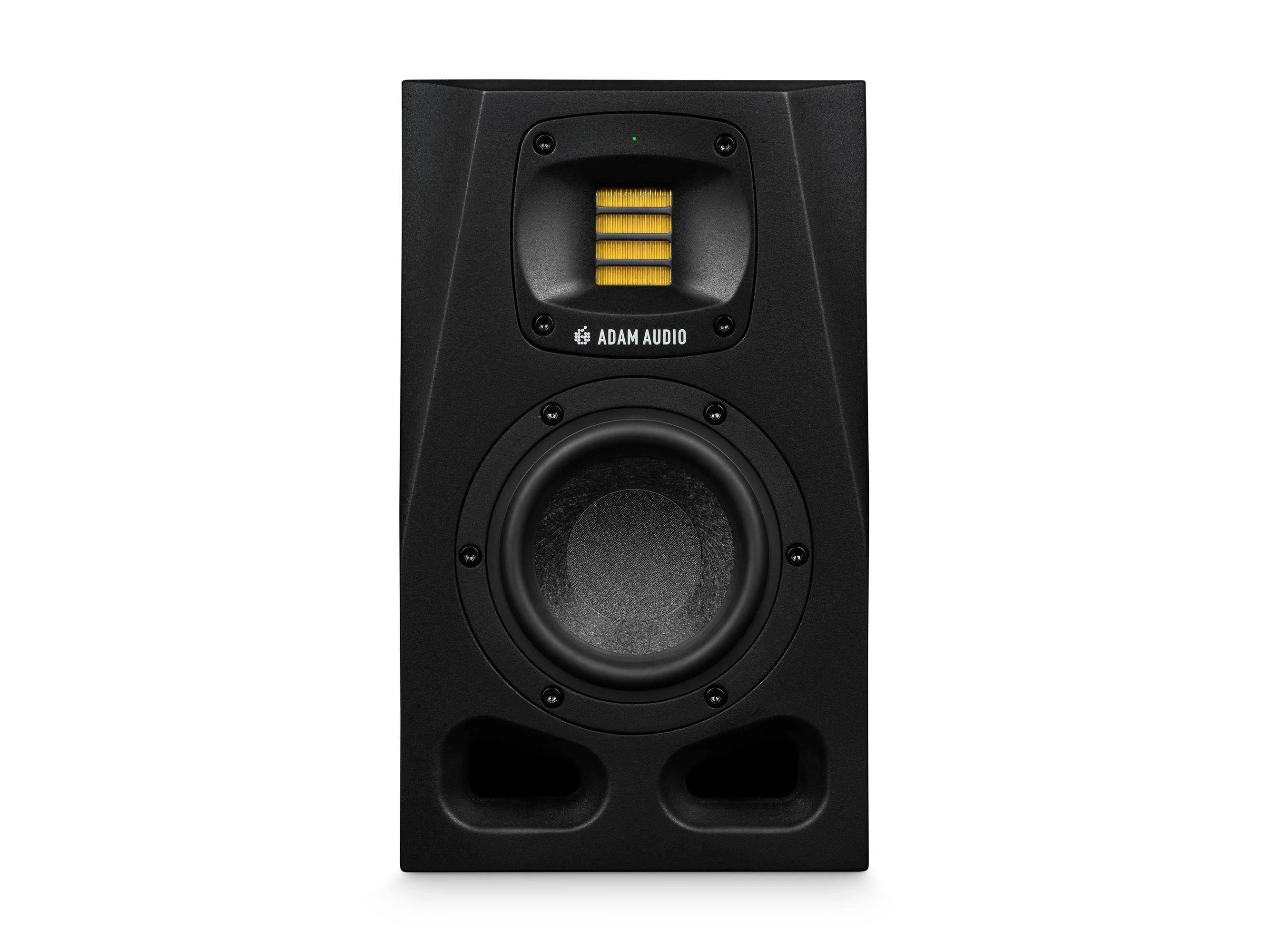
The ADAM Audio A4V is a compact powered two-way studio monitor supplied here as one black loudspeaker. A four-inch Multi-Layer Mineral-fibre woofer works with the manufacturer’s X-ART tweeter, while the rotatable HPS waveguide and onboard DSP provide options for adapting the monitor to its installation. Its small cabinet is useful where available space is limited, but it remains a single monitor rather than a stereo speaker set. Balanced XLR and unbalanced RCA connections accept analogue audio from appropriate interfaces, mixers or monitoring controllers. Rear-panel controls provide room adaptation, voicing and level adjustment. The separate socket marked Remote Control should not be confused with an audio input or advertised as a network-streaming connection. ADAM’s product overview lists a frequency range of 53 Hz to 42 kHz. No response-tolerance or continuous amplifier-power claim is inferred from those endpoints. This listing identifies the A4V, confirmed by the donor-bound barcode and readable rear model label. Built-in amplification removes the need for a separate speaker power amplifier; two units are required for a stereo monitoring setup.
Reloop
Reloop FLUX USB-C DVS Audio Interface
USB-C DVS audio interface
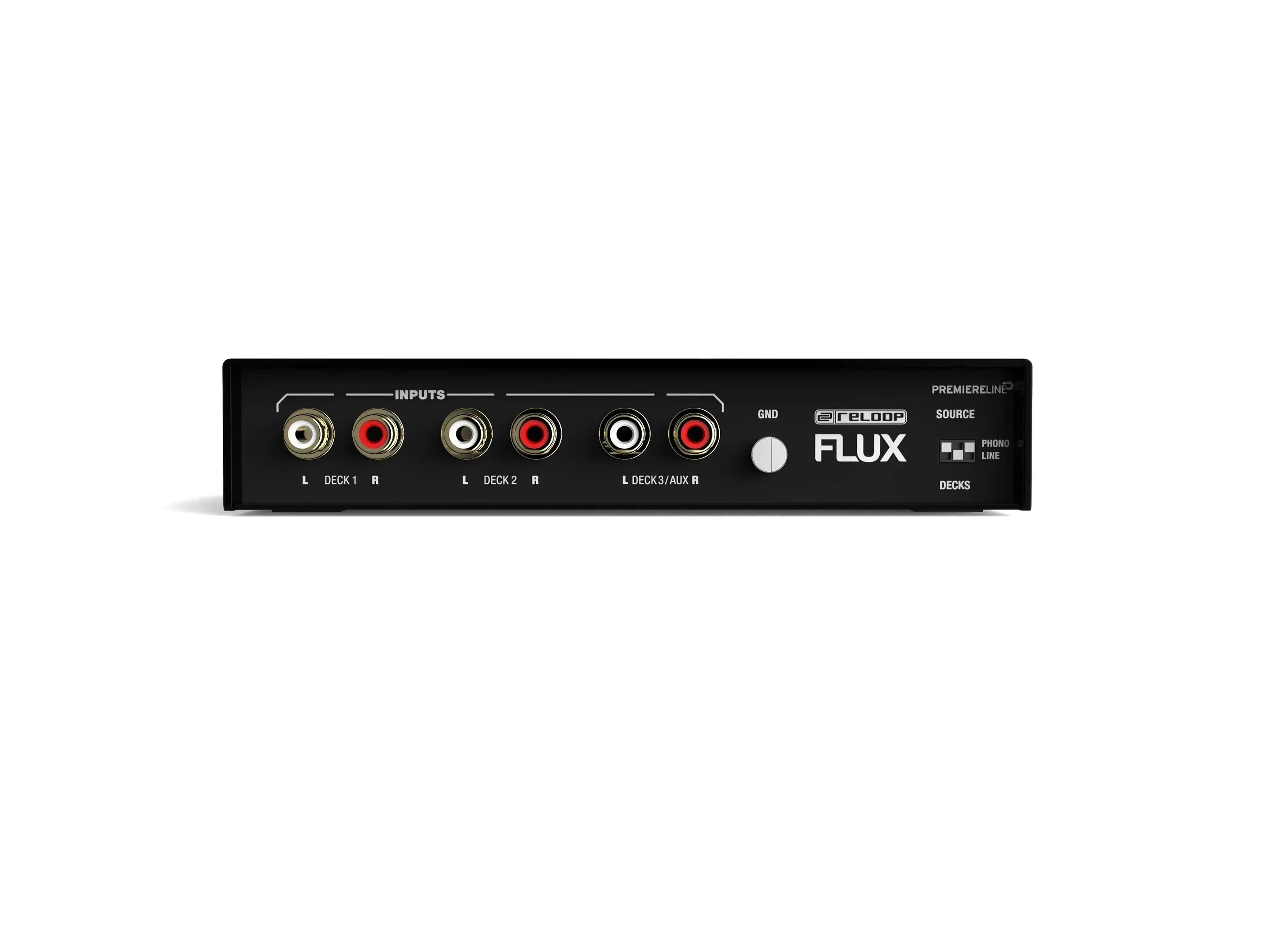
The Reloop FLUX is a USB-C audio interface designed for compatible Serato DJ Pro digital vinyl setups. It provides three stereo inputs and three stereo outputs, an auxiliary output and a built-in two-port USB-A hub. The manufacturer specifies audio operation up to 24-bit/96 kHz. These connections link a suitable computer, mixer and playback sources; the FLUX is not itself a standalone DJ mixer, media player or loudspeaker system. Software entitlements and compatible DVS requirements should be checked for the chosen workflow rather than copied from a different Reloop mixer bundle. This listing supplies one interface and does not include the turntables, mixer, laptop or cables shown in illustrative system pictures. Those promotional and connection scenes have been excluded from the clean exact-product gallery.
AKG
AKG C214 Large-Diaphragm Condenser Microphone — Single
Fixed cardioid pickup; single microphone
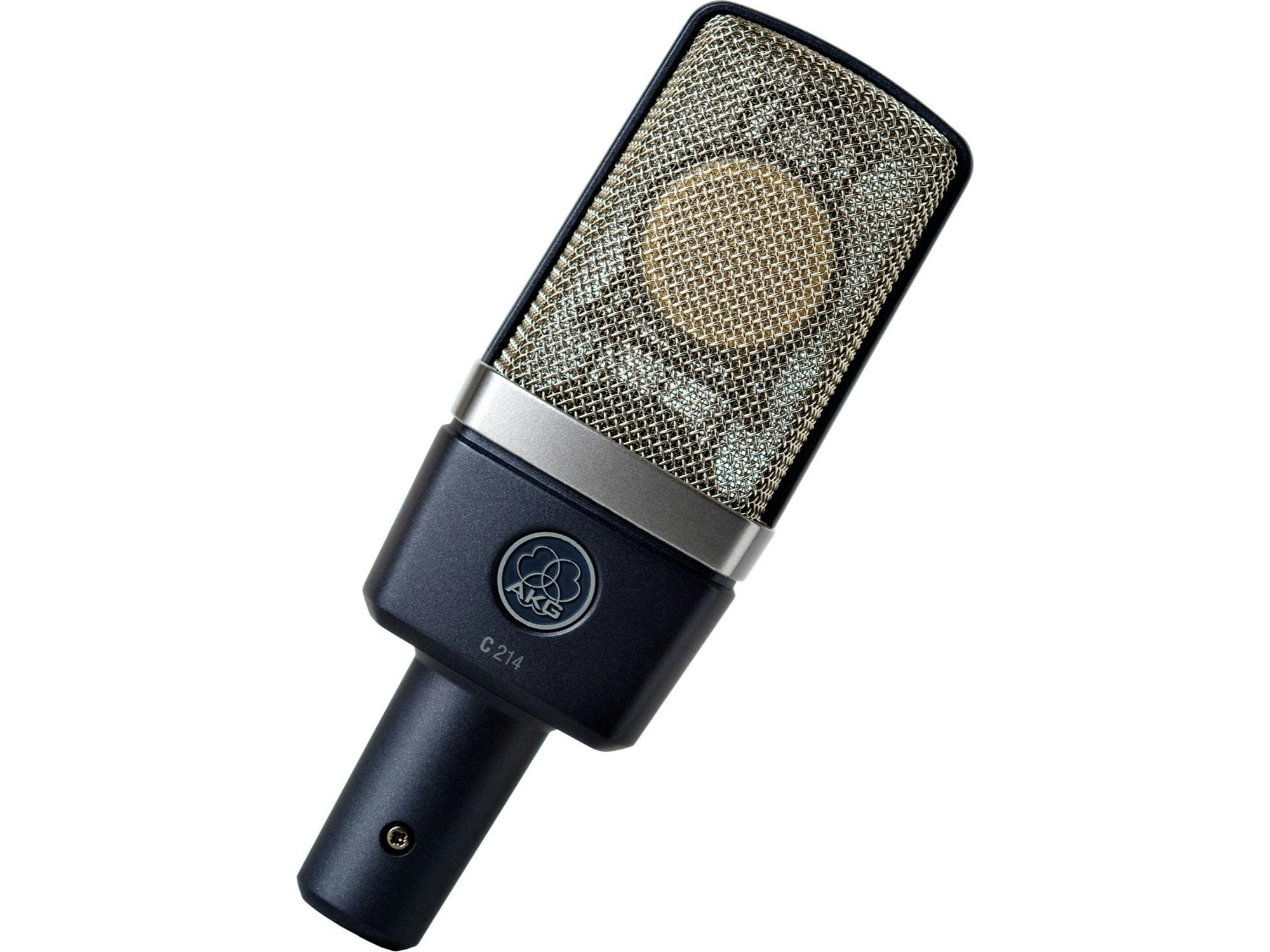
The AKG C214 is a large-diaphragm condenser microphone with a fixed cardioid pickup pattern for recording vocals and instruments. Its side-address capsule captures sound from the front of the grille, while an integrated suspension helps reduce mechanical vibration reaching the capsule. It connects to a compatible microphone input using a balanced three-pin XLR output; it is not a USB microphone or a standalone recording device. Two switches provide practical control at the microphone. The 20 dB attenuation pad reduces the signal level for louder sources, and the 160 Hz bass-cut filter reduces low-frequency content when engaged. AKG specifies a 20 Hz to 20 kHz audio bandwidth and a powering interface of 9 to 52 V. These are manufacturer specifications rather than a promise of a perfectly flat response or the removal of room noise. This listing is one C214, not a matched stereo pair or the multi-pattern C414. The standard single-microphone package includes a shock mount, foam windscreen and carrying case. A recording interface, support stand and recording system are separate requirements. Positioning, microphone gain and the recording room remain important to the result.
Solid State Logic
SSL 12 USB Audio Interface
Four analogue microphone preamps
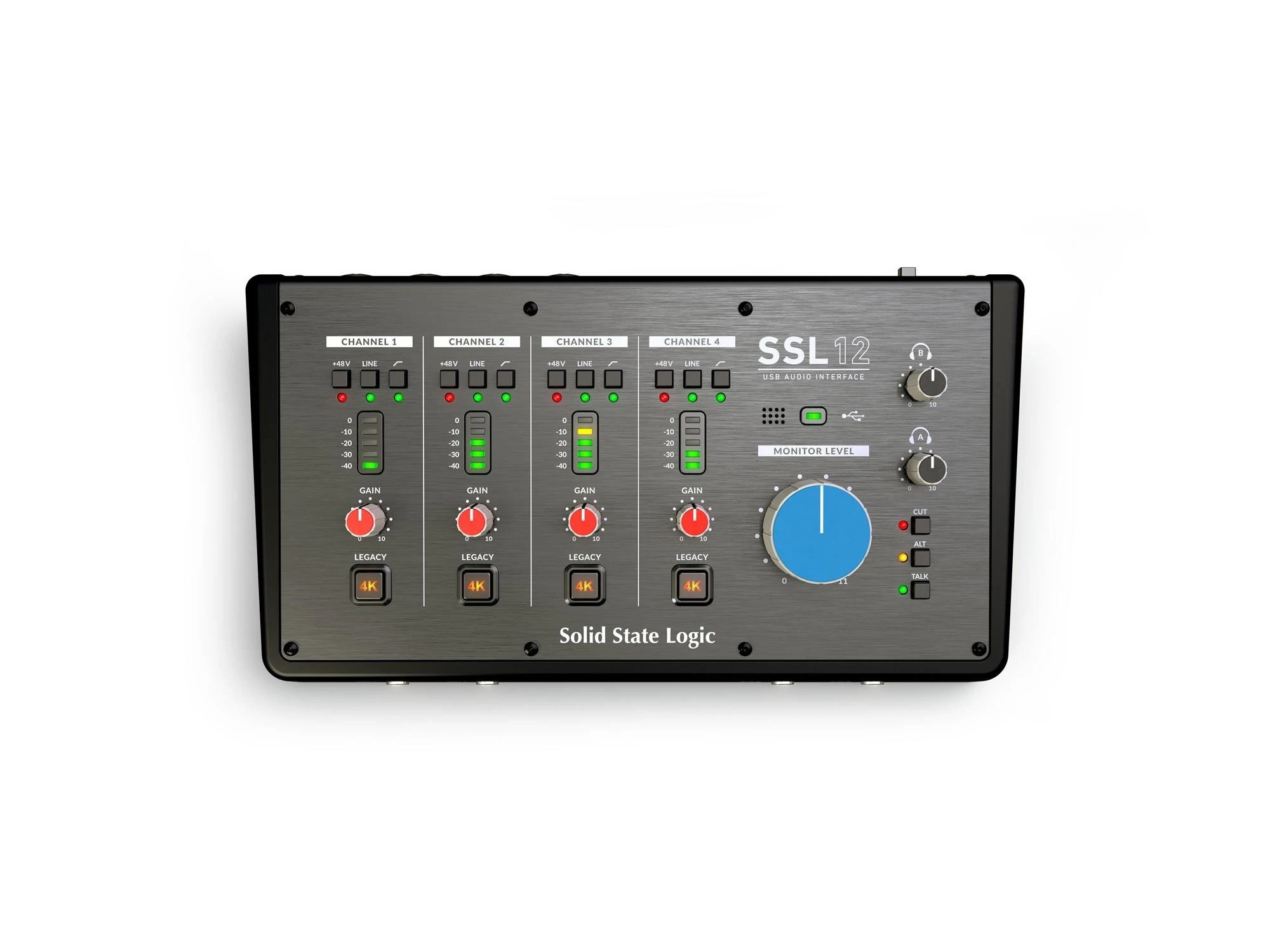
The Solid State Logic SSL 12 is a desktop USB recording interface with four analogue microphone preamps. Each channel has gain control, phantom power and a selectable Legacy mode, while the front-panel instrument connections provide an alternative for compatible guitars and other high-impedance sources. Its advertised twelve-input configuration includes digital expansion: the optical ADAT input can add up to eight channels from suitable external equipment, rather than providing twelve physical analogue sockets. The top-panel monitor control and headphone connections support recording and playback workflows. SSL 360 software provides a configurable mixer for monitoring and loopback, allowing computer playback to be routed into a recording or streaming application. Available ADAT channel counts depend on the selected sample rate and connected equipment. SSL describes the interface as USB bus-powered, using USB 3.0 for power while audio communication follows the USB 2.0 protocol. This is an audio interface for use with a compatible computer, not a self-contained recorder. Microphones, external ADAT preamps, speakers and a computer are not included in this listing.
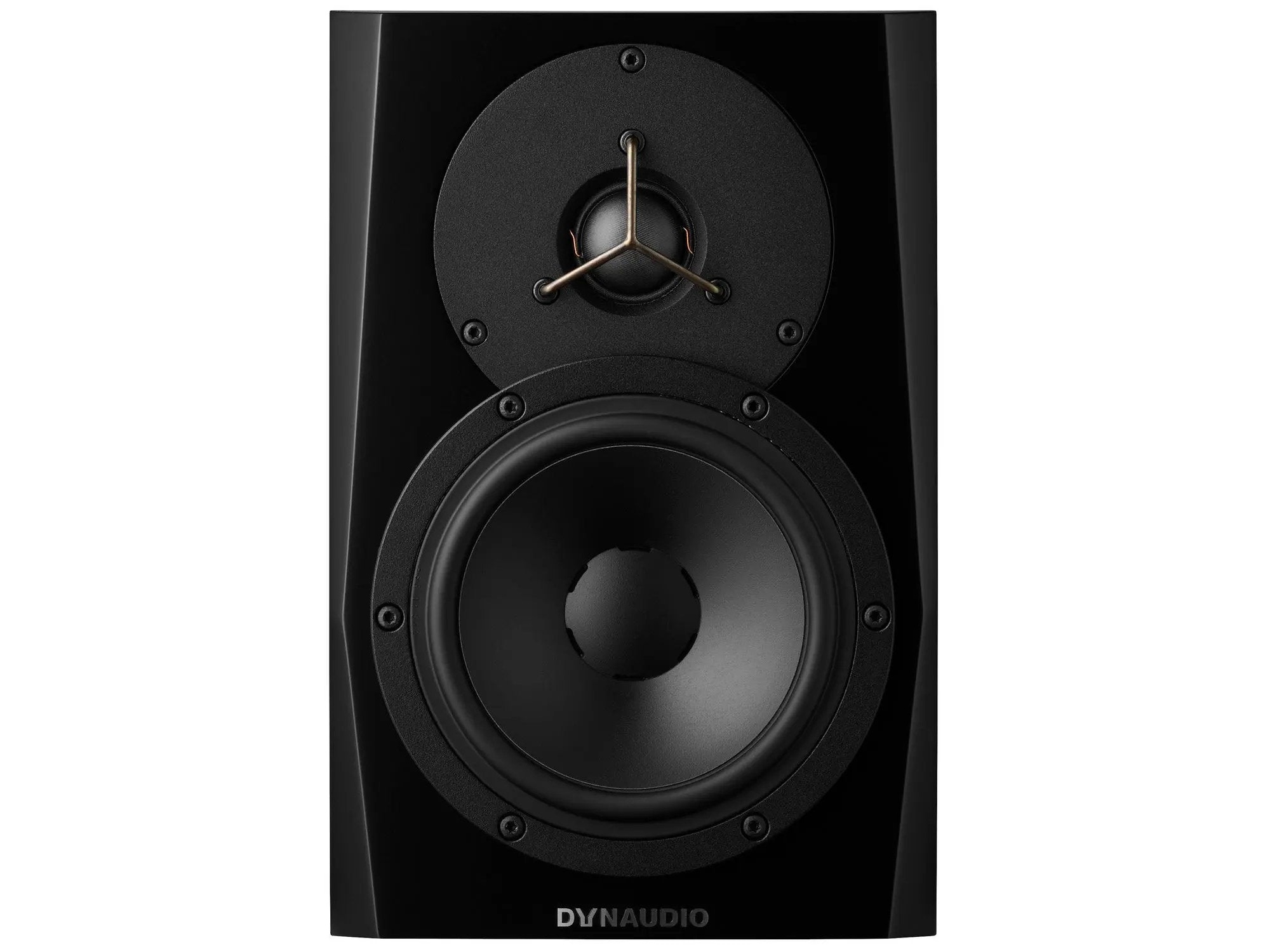
Dynaudio
Dynaudio LYD 5 5-inch Active Studio Monitor — Black Single
Single black monitor with 5-inch woofer and 1-inch soft-dome tweeter
The Dynaudio LYD 5 is a black active nearfield studio monitor offered as one speaker, not a stereo pair. Its 5-inch woofer and one-inch soft-dome tweeter are driven by separate Class D amplifiers: 50 watts for the low-frequency section and 50 watts for the high-frequency section. Balanced XLR and unbalanced RCA inputs provide analogue connections for a suitable audio interface, mixer or playback source. Rear-panel DSP controls adjust Bass Extension and Sound Balance, while the Position setting offers separate tuning for free-standing placement or placement within 50 centimetres of a wall. The wall setting is an acoustic tuning option, not a promise of included wall-mounting hardware. These settings allow the monitor to be adapted to its listening environment without an external control application. Dynaudio lists dimensions of 170 × 260 × 211 mm and a weight of 5.7 kg for this model. A second matching monitor is needed for stereo monitoring. Manufacturer maximum sound-pressure figures measured with a pair are not presented as single-speaker ratings, and no unsupported software, mounting accessories or untoleranced full frequency-response claim is included.
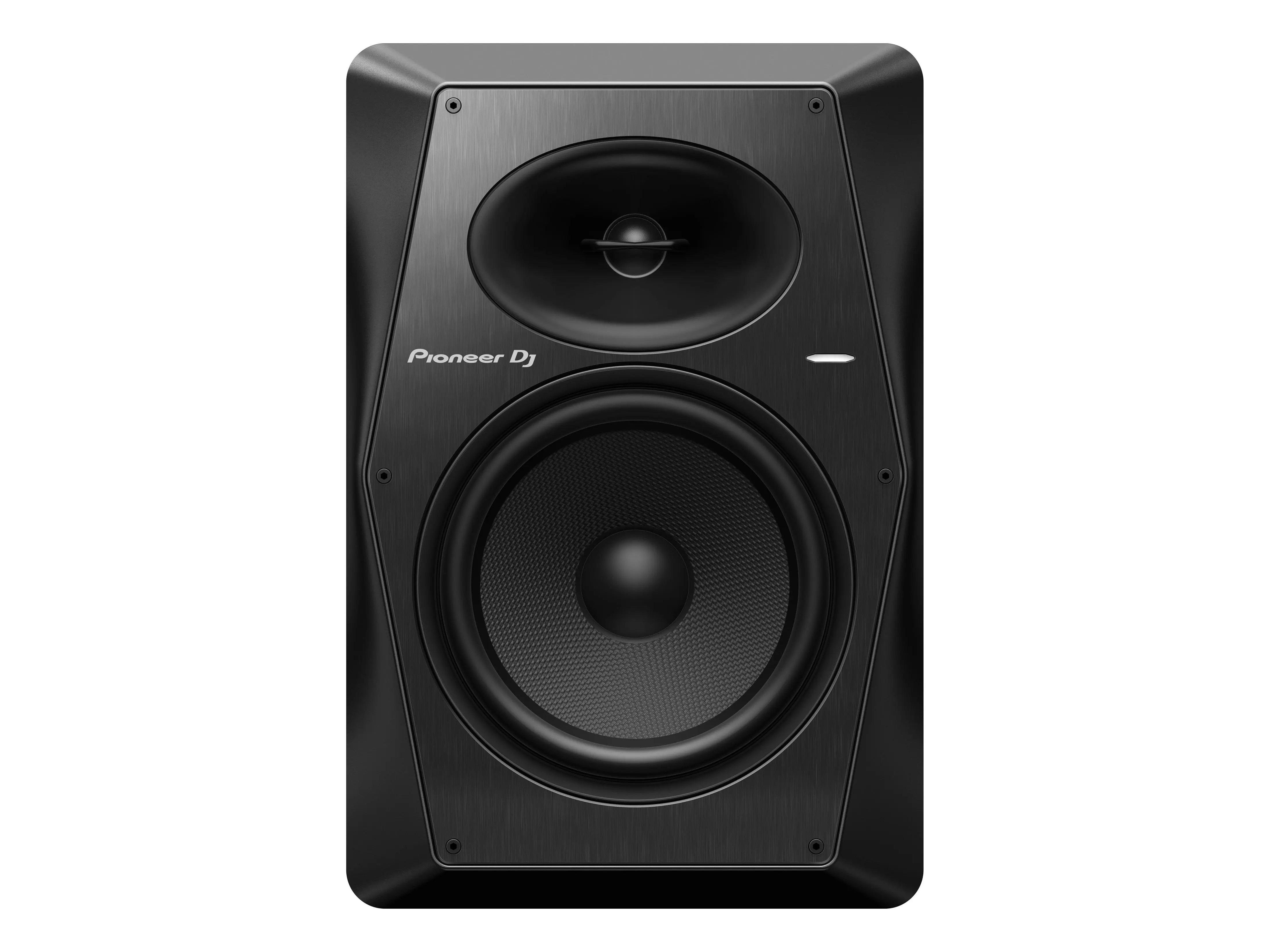
Pioneer DJ
Pioneer DJ VM-80 8-inch Active Studio Monitor — Single
Single active monitor with 8-inch aramid-cone woofer
The Pioneer DJ VM-80 is an active studio monitor supplied as one speaker, not a stereo pair. Its eight-inch aramid-cone woofer is combined with a high-frequency driver and a Class D amplifier using 96 kHz DSP. The manufacturer specifies separate amplifier outputs of 90 watts for the low-frequency section and 30 watts for the high-frequency section, each into four ohms; these figures are not a sound-pressure rating. Rear-panel low and high EQ controls each have four positions, giving sixteen combinations for adapting playback to the room and the listening preference. A balanced XLR/TRS combination input and an unbalanced RCA input accept suitable audio sources. The rear bass-reflex port uses the Vortex Bass Accelerator design, while the aluminium front baffle and tweeter guard form part of the cabinet construction. Pioneer lists a frequency range of 34 Hz to 36 kHz without a response tolerance. The monitor requires mains power; a power cable and cushioned feet are included. A second VM-80 is required for a matching stereo pair.